


How to Use a Mandoline Safely Every Time
A mandoline can turn one potato into a pile of even, crisp-ready slices in seconds. That speed is exactly why it helps to learn how to use mandoline safely before it becomes your go-to tool for salads, gratins, slaws, and sheet-pan dinners. The blade is built to cut efficiently, not to forgive a rushed hand.
The good news is that safe slicing does not require chef-level skills or a drawer full of gear. A stable work surface, the right grip, and a little patience make this everyday prep tool far easier to enjoy. Once the setup feels routine, you get the neat slices and quicker meal prep without the stress.
Set Up Before You Slice
Most mandoline mishaps happen before the first vegetable reaches the blade. The tool shifts on the counter, the food is too small to hold comfortably, or the cook starts slicing without a hand guard nearby. Taking one minute to prepare changes the whole experience.
Start with a clean, dry counter and a mandoline that sits flat. If your model has fold-out legs, lock them fully into place. If it rests over a bowl, make sure the bowl is sturdy enough that it will not slide or tip as food collects inside. A damp kitchen towel placed under the mandoline can add grip when you are working on a smooth countertop.
Choose firm, washed produce. Potatoes, cucumbers, apples, carrots, cabbage, zucchini, and onions all slice beautifully when they are fresh and stable. Very soft tomatoes, overripe fruit, or slippery peeled vegetables can be harder to control. For those ingredients, a sharp chef's knife may be the better choice.
Before slicing, check the blade setting. Thin slices are useful for cucumber salads and potato chips, while a thicker setting gives you more control for roasted vegetables and gratins. There is no prize for choosing the thinnest setting. Pick the thickness that suits the recipe and feels manageable.
How to Use a Mandoline Safely From Start to Finish
A mandoline works best with smooth, steady strokes. You are guiding food across a fixed blade, not forcing it through. Pressing too hard makes the tool less controlled and can cause the food to slip.
Use the hand guard every time
The hand guard is not an optional accessory. It is the essential piece that keeps your fingers away from the blade while holding food securely. Attach the vegetable or fruit firmly to the guard, then keep your hand on the guard rather than directly on the food.
Use a comfortable, even motion from top to bottom. Keep your fingers behind the protective surface, and do not reach around it to stabilize the ingredient. If the guard feels awkward at first, slow down instead of abandoning it. A few practice passes with a cucumber or potato can help you find a rhythm.
Some cooks prefer a cut-resistant glove as an extra layer of protection. It can be a helpful backup, especially when you are new to mandolines, but it should not replace the hand guard. The best approach is to use both when possible: the guard controls the food, while the glove offers more protection if your hand gets close to the blade.
Stop before the last bit of food
This is the rule worth remembering: do not slice the final small piece. When a vegetable becomes too short, narrow, or wobbly for the hand guard to hold securely, set it aside. Add that end piece to soup, stock, a stir-fry, or your snack plate.
Leaving behind an inch or two of a potato costs almost nothing. Trying to get one last paper-thin slice can cost you a painful cut and an interrupted dinner. Smart kitchen habits often look like knowing when to stop.
Keep your pace calm and consistent
Fast prep is one of a mandoline's biggest benefits, but speed should come after control. Use long, deliberate strokes and let the blade do the work. Avoid chopping motions, twisting the food, or pushing down with extra force.
Pay attention to the ingredient as it gets smaller. Round foods such as potatoes and onions can become unstable near the end. Halving them first creates a flat side, which helps the food stay anchored in the guard. For long vegetables like zucchini or cucumber, trim the ends so they sit evenly.
Keep your eyes on the blade path
It is tempting to look into the bowl to check your growing pile of slices. Instead, keep your focus on the food and hand guard as they move across the mandoline. If you need to adjust the bowl, clear slices, answer a question, or reach for another ingredient, stop slicing first.
This simple pause matters. A mandoline is not a tool to use while multitasking, even for a few seconds.
Choose the Cut That Fits the Job
Mandolines often include interchangeable blades for julienne strips, matchsticks, waffle cuts, or crinkle slices. These options can make everyday meals feel a little more polished, but each attachment needs the same careful setup.
Install blades while the mandoline is resting flat on the counter, with the sharp edge facing away from your hands whenever possible. Hold blade inserts by their dull plastic frame or designated tabs, never by the cutting edge. Confirm that each piece is seated securely before bringing food near it.
For a first try, use the straight slicing blade. It is the easiest setting to see and control. Once that feels familiar, julienne carrots for a quick slaw or slice cabbage for tacos. Specialty cuts are useful, but they are not necessary for every meal. A simple, even slice is often the most versatile one.
Small Habits That Make Slicing Safer
Keeping a mandoline safe comes down to repeatable routines. Before each use, take a quick look at the tool. Check that the blade is secure, the feet are stable, and the hand guard is clean and close by. If anything is cracked, loose, or bent, do not use it until it has been repaired or replaced.
A few practical habits make a noticeable difference:
- Slice into a wide, stable bowl or onto a cutting board with enough room for the food to land.
- Work with dry hands and dry handles, especially after washing produce.
- Keep children and pets away from the prep area while the mandoline is out.
- Never try to catch a slipping mandoline or falling blade attachment.
- Put the blade away as soon as you finish rather than leaving it among other dishes.
Clean a Mandoline Without Reaching Across the Blade
Cleaning is another moment when fingers can get too close to sharp edges. Do not toss a mandoline into a sink full of cloudy water where the blade is hidden. Wash it right after use, while food residue is still easy to remove and the tool is easy to see.
Hold the mandoline by its frame and rinse food particles away from the blade. Use a dish brush with a handle or a sponge held flat against the safe side of the surface. Move away from the cutting edge, not across it. If slices of potato or carrot are caught in a julienne blade, use a brush or wooden pick to dislodge them. Never use your fingertips.
Check the manufacturer's care instructions before placing any part in the dishwasher. Some mandolines are dishwasher-safe, while others stay sharper longer with gentle hand washing. Either way, dry the tool completely before storing it. Moisture can affect metal parts and makes the next use less pleasant.
Store It Like the Sharp Tool It Is
A mandoline should not sit loose in a crowded utensil drawer. Besides dulling or damaging the blade, loose storage creates a surprise sharp edge when someone reaches in for a whisk or spatula.
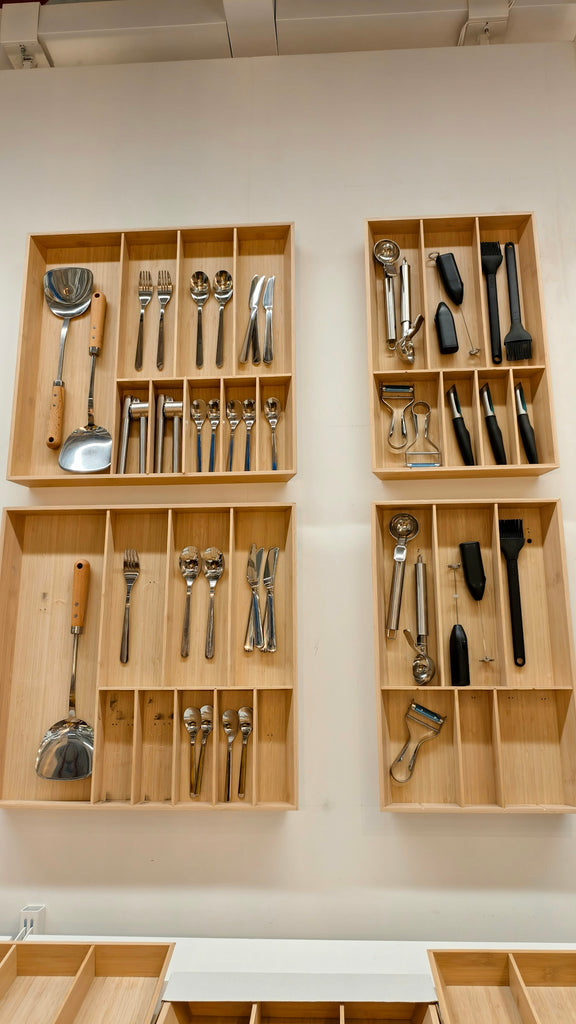
Use the blade cover or safety lock if your model includes one. Store blade inserts in their protective holder, and keep the hand guard with the mandoline so it is never missing when you need it. A designated cabinet shelf, covered bin, or drawer organizer keeps everything together and makes the tool easier to grab for a quick weeknight meal.
At Kitchen Canvas, we believe useful kitchen tools should make everyday cooking feel simpler, not more complicated. A well-stored mandoline earns its place by helping you prep vegetables quickly while keeping your kitchen organized and your routine comfortable.
When a Knife Is the Better Option
A mandoline is excellent for batches of uniform slices, but it is not the answer to every cutting task. If you only need a few pieces, need irregular shapes, or are working with a very soft ingredient, a knife may be faster and easier to manage. The safest tool is often the one that best fits the job.
Use your mandoline when consistency will improve the dish: layered potatoes that cook evenly, thin cucumber rounds for a salad, shredded cabbage for slaw, or apple slices for a tart. Reach for a knife when you need more flexibility. Both tools have a place in a well-equipped kitchen.
The best habit is simple: set up carefully, use the guard, and stop while you still have plenty of control. With those few choices, a mandoline can become one of the most useful tools in your kitchen - ready to make fresh, colorful meals feel a little easier every day.
Related post
15
Oct


