

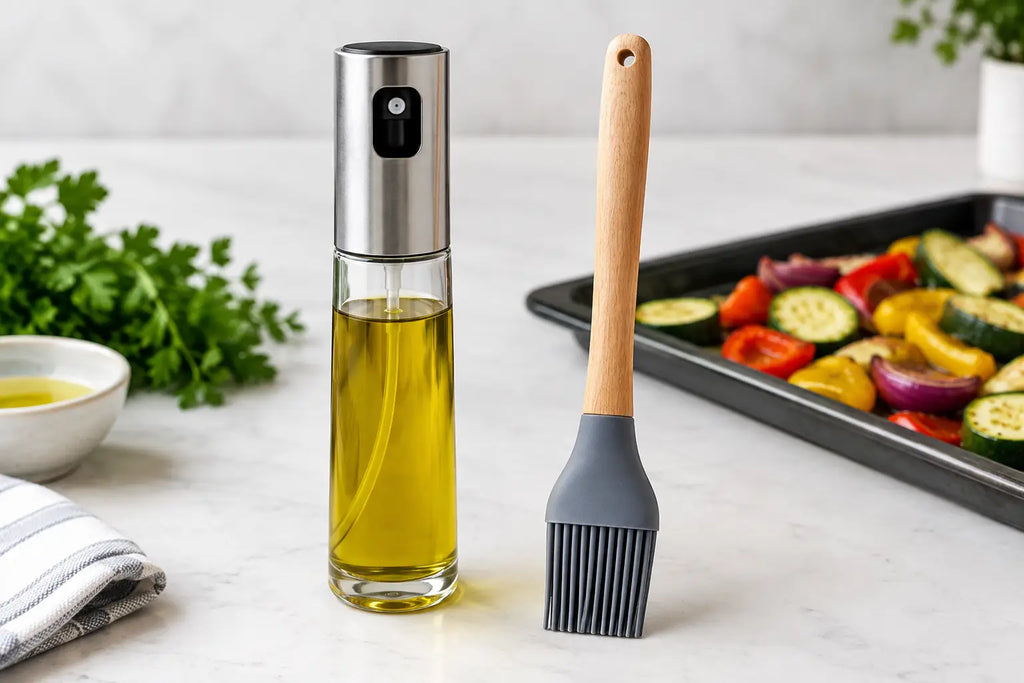
Oil Sprayer vs Pastry Brush - Which Is Best?
A sheet pan of vegetables can go from crisp and caramelized to dry and uneven in a matter of minutes. Often, the difference is not the recipe - it is how the oil reached the food. In the oil sprayer vs pastry brush debate, neither tool wins every job. One makes a light, even coat feel effortless; the other gives you precise coverage exactly where you want it.
For a kitchen that works harder without feeling crowded, it helps to understand what each tool does best. Once you do, reaching for the right one becomes a small habit that can improve weeknight dinners, weekend baking, and everything in between.
Oil Sprayer vs Pastry Brush: The Quick Answer
Choose an oil sprayer when you want a fine, light layer of oil across a larger surface. It is especially useful for air-fryer baskets, sheet-pan vegetables, skillet cooking, grilled foods, and pans that need a quick coating before food goes in. It can help you use less oil while still covering ingredients evenly.
Choose a pastry brush when you need control, coverage in corners, or a thicker layer of oil, butter, glaze, or sauce. It is the better match for brushing a pie crust, coating delicate fish, buttering a baking dish, or adding barbecue sauce in layers.
The simplest way to think about it is this: an oil sprayer distributes, while a pastry brush paints. A well-stocked everyday kitchen can benefit from both, but if you only want one, your usual cooking style should make the choice clear.
When an Oil Sprayer Makes Cooking Easier
An oil sprayer is designed for speed and even distribution. Fill it with your preferred cooking oil, then mist food or cookware with a few quick pumps. The result is a lighter coating than pouring oil straight from the bottle, with far less pooling at the bottom of a bowl or pan.
This is particularly helpful for vegetables. Broccoli florets, zucchini rounds, potatoes, and green beans all roast more evenly with a thin layer of oil, but they do not need to be soaked. A sprayer gets oil into the folds and surfaces that can be hard to reach with a spoon or brush. Toss the vegetables after spraying, add seasoning, and they are ready for the oven.
Air-fryer cooking is another strong use case. A little oil helps food brown and crisp, but too much can create smoke, mess, or heavy results. A light mist is often enough for homemade fries, chicken tenders, shrimp, and breaded vegetables. It also helps seasoning cling without making the coating wet.
An oil sprayer is useful before cooking, too. Spray a skillet before adding eggs, coat a grill basket before loading vegetables, or mist a baking sheet before arranging cookies or roasted fruit. These small steps can make cleanup easier and help food release more cleanly.
Best Foods for an Oil Sprayer
Sprayers shine when the food has plenty of surface area or when you are preparing several servings at once. Think roasted vegetables, salad greens, homemade chips, popcorn, grilled chicken, and sheet-pan meals. They are also handy for lightly oiling dough before it rises or giving a finished dish a quick touch of olive oil.
That said, a sprayer is not the best tool for every liquid. Thick dressings, melted butter with milk solids, sticky sauces, and marinades can clog the nozzle or produce an uneven stream. For these jobs, a brush is the smarter, less frustrating option.
What to Know Before Filling a Sprayer
Oil sprayers work best with oils that are smooth and free of particles. Filtered olive oil, avocado oil, canola oil, and vegetable oil are easy choices. Oils infused with garlic, herbs, chili flakes, or spices may leave residue behind, especially if the sprayer is not cleaned regularly.
A sprayer also needs a little maintenance. Do not let oil sit for months, and rinse or clean the mechanism according to its care instructions. If the nozzle seems less consistent, warm water and a careful cleaning can help remove buildup. A clean sprayer is more likely to produce the fine mist you bought it for.
When a Pastry Brush Is the Better Choice
A pastry brush gives you detail that a sprayer cannot. Its bristles carry liquid directly to the food, which means you can control the amount, target a specific area, and work sauces into every edge. If the job calls for a visible coating rather than a mist, reach for the brush.
Baking is where this tool earns its name. Brushing melted butter over crescent rolls, oiling the edges of a pie crust, or applying an egg wash to pastries all require a steady hand and even contact. A sprayer might add moisture to the surface, but it cannot create the glossy finish that a brush can.
The same is true for savory cooking. Use a brush to coat salmon with olive oil before seasoning, add a rich layer of garlic butter to corn, or apply barbecue sauce to ribs without flooding the pan. With a brush, you can build flavor gradually. Add sauce during the final minutes of grilling, let it set, then brush on another layer for a deeper finish.
Silicone vs. Traditional Bristles
A silicone pastry brush is a practical pick for everyday use because it is easy to rinse, resistant to staining, and less likely to hold onto strong odors. It works well with oil, butter, sauces, and marinades. Many home cooks also appreciate that silicone bristles do not shed into food.
Traditional natural-fiber or nylon brushes can offer a softer feel and may hold thin liquids differently, which some bakers prefer for delicate pastry work. The trade-off is that they generally need more careful washing and drying. If you want one brush that moves comfortably between savory meals and baking projects, silicone is often the simpler choice.
Oil Sprayer vs Pastry Brush for Common Kitchen Tasks
For roasting vegetables, an oil sprayer is usually faster and lighter. It covers a full tray efficiently, then lets you toss everything together for a balanced finish. If you are roasting a single piece of fish or a small portion of vegetables, though, a brush can be just as convenient.
For baking pans, either tool can work. A sprayer is quick for a muffin tin, cake pan, or loaf pan, especially when you want a thin, even coat. A pastry brush is better for getting softened butter into the corners of an intricate pan or coating a dish where you want a more generous layer.
For grilling, the choice depends on what you are adding. Spray oil onto vegetables, corn, or the grill basket before cooking. Use a brush for marinades, butter, and barbecue sauce once food is on the grill. Keeping both nearby prevents the common mistake of using too much sauce too early, which can lead to burning.
For salad dressing, an oil sprayer can lightly coat greens before you add vinegar, citrus, or seasoning. This is a simple way to avoid overdressing a small salad. For a thicker vinaigrette or a glaze made with honey or mustard, use a brush only if you are coating a specific ingredient, such as grilled peaches or chicken.
For air-fried foods, the sprayer has the advantage. A fine mist helps create crisp results without weighing down breading or leaving puddles in the basket. A brush can still work for larger items, like a chicken breast or salmon fillet, but use a light touch.
The Cleanup Factor Matters More Than You Think
The best kitchen tools are the ones you will actually use, and easy cleanup plays a big role. A pastry brush is usually the simpler tool to wash immediately after use. Rinse it after oil or butter, then wash with warm, soapy water. Do not leave sticky sauce or egg wash to dry in the bristles.
An oil sprayer takes more attention because its nozzle and pump do the work. Empty it if you will not use it regularly, keep the top clean, and avoid letting old oil build up. The extra care is worth it if you often roast, air fry, or cook in batches. It turns a small cooking step into something quicker, cleaner, and more consistent.
Which One Should You Buy First?
Start with an oil sprayer if your meals lean toward roasted vegetables, air-fryer recipes, skillet dinners, salads, or meal prep. It is a useful everyday upgrade for anyone who wants better coverage with less mess and less guesswork.
Start with a pastry brush if you bake often, grill with sauces, make garlic butter, or like to glaze and baste food. It delivers the control a sprayer cannot, and it handles thicker ingredients with ease.
If your kitchen has room for both, they make a smart pair rather than competing tools. The sprayer handles broad, light coverage. The brush takes care of detail, flavor, and finishing touches. Keep each within easy reach, and the next time a recipe calls for oil, butter, or sauce, you can choose the tool that makes the job feel simple.
Related post
15
Oct


