


Kitchen Drawer Organizer Ideas That Actually Work
The drawer beside your stove should not make dinner harder. If you have to dig past loose measuring spoons, tangled tongs, and a stack of mystery gadgets to find one spatula, a kitchen drawer organizer can make a noticeable difference in minutes. The goal is not a picture-perfect kitchen. It is a setup that keeps the tools you use most within easy reach and makes cleanup faster after every meal.
A better drawer starts with an honest look at how you cook. A busy weekday kitchen needs quick access to turners, spoons, peelers, and can openers. A baking drawer may need room for measuring cups, piping tips, and parchment paper. Once each drawer has a clear job, choosing the right organizer becomes much simpler.
Start With the Drawer, Not the Organizer
It is tempting to buy a tray first and hope it fits. A few quick measurements prevent that frustrating result. Measure the inside width, depth, and height of the drawer, including any space lost to drawer hardware. Then open the drawer fully and notice whether tall containers or dividers could catch on the cabinet frame.
Next, empty the drawer completely. This is the best time to remove duplicates, worn-out tools, and single-purpose gadgets that have not earned their space. Keep the items you reach for every week, not every item you might use someday. A drawer organizer works best when it creates breathing room rather than simply containing more clutter.
Think about location, too. The drawer closest to the cooktop is prime real estate for cooking tools. The drawer near the prep area is ideal for knives, peelers, and measuring tools. Store specialty pieces, such as cookie cutters or holiday serving utensils, in a less convenient spot so daily essentials stay easy to grab.
Choose a Kitchen Drawer Organizer for Your Routine
There is no one-size-fits-all solution, because drawers and cooking habits vary. The best kitchen drawer organizer is the one that supports the way your household actually moves through breakfast, dinner, and cleanup.
Expandable trays for utensil drawers
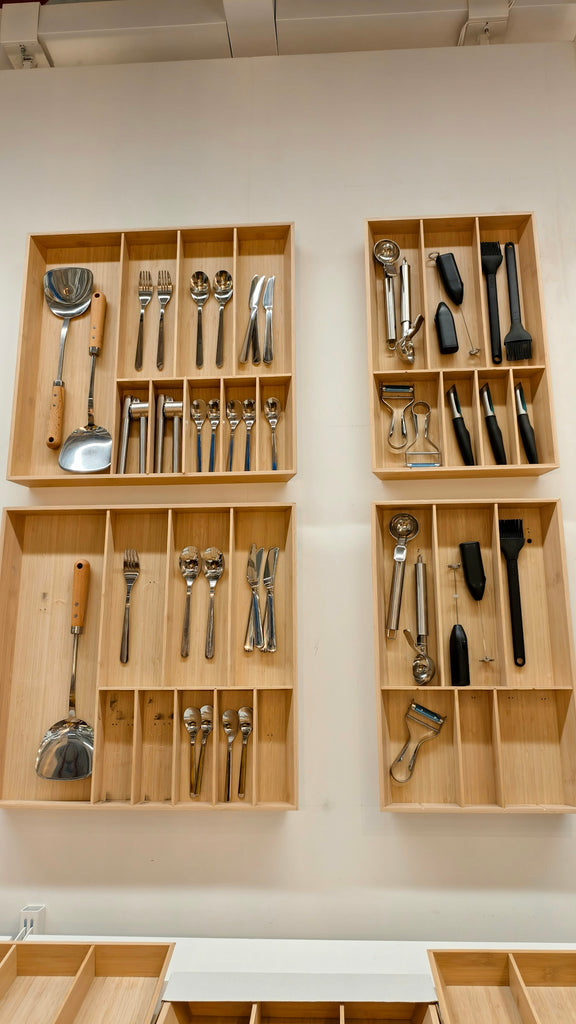
Expandable trays are a practical choice for standard utensil drawers. Their adjustable sides help fill unused width, so the organizer looks built in instead of sliding around every time the drawer opens. Look for compartments wide enough for serving spoons and tongs, not just forks and teaspoons.
This style works especially well when you want a clean, classic layout. Use the largest sections for spatulas, turners, and cooking spoons, then reserve narrower sections for peelers, bottle openers, and small tools. If your drawer is unusually narrow, confirm the organizer’s minimum and maximum dimensions before ordering.
Adjustable dividers for flexible storage
Spring-loaded or interlocking dividers create custom sections without locking you into fixed compartment sizes. They are a smart option for deep drawers, wide drawers, or collections that change often. You can create a long area for rolling pins, a compact spot for measuring spoons, or a divided zone for reusable food-storage accessories.
The trade-off is that dividers need a secure fit. If they shift easily, small tools can migrate underneath them. Adding non-slip drawer liner first can help keep both dividers and containers in place.
Small bins for loose tools and packets
Clear or solid bins are useful for the pieces that tend to wander: corn holders, bag clips, thermometer probes, replacement blades, tea bags, and sauce packets. They also make it easier to lift out a whole category when you are cleaning the drawer.
Bins are not always the best choice for long utensils, since they can waste space in a shallow drawer. They shine in deeper utility drawers where a few neatly defined zones are more useful than many narrow compartments.
Knife organizers for safer storage
Loose knives are hard on hands and hard on drawers. An in-drawer knife organizer protects blades, keeps handles aligned, and frees counter space that would otherwise be used by a knife block. Choose one that fits your longest everyday knife and allows enough clearance for the drawer to close smoothly.
If you use a mix of chef’s knives, paring knives, and steak knives, look for staggered slots or a two-level design. Keeping blades covered and separated also helps them stay sharper longer.
Build Zones That Make Cooking Easier
A drawer becomes more useful when every section has a purpose. Instead of sorting only by item type, sort by task. This is what makes a simple organizer feel like an everyday upgrade.
Your cooking zone might hold silicone spatulas, wooden spoons, tongs, and a whisk. Your prep zone could include a peeler, garlic press, microplane, can opener, measuring cups, and kitchen shears. A baking zone can group measuring spoons, decorating tools, clips, and rolling accessories together.
Keep the most-used items at the front or in the easiest-to-reach compartment. Put backups, occasional-use tools, and refill items toward the back. This small shift reduces the constant reshuffling that makes an organized drawer fall apart within a week.
For families, consider creating a grab-and-go snack or lunch-prep drawer with reusable straws, sandwich cutters, bag clips, and napkins. It gives kids and guests a place to find what they need without opening every cabinet. The setup does not need to be elaborate to save time on busy mornings.
Do Not Forget the Awkward Drawers
Some of the most cluttered kitchen drawers are not utensil drawers at all. The shallow drawer under the counter may be packed with foil, plastic wrap, parchment paper, and food-storage bags. A dedicated wrap organizer keeps boxes from sliding and makes tearing off a sheet far less annoying.
Deep drawers often collect pots, lids, cutting boards, and bulky prep tools. Vertical dividers can turn that pile into an easy-to-see system, especially for cutting boards, sheet pans, and pan lids. If your drawer is large enough, use a low bin for small appliances or attachments that would otherwise get buried.
A slim drawer can become a useful spice or tea storage area when containers are arranged label-up. You may prefer angled inserts for spice jars, but flat trays are often enough if your drawer is shallow. The right choice depends on whether you want to see every label at once or maximize the number of jars you can store.
Materials and Features Worth Considering
Bamboo organizers bring a warm, polished look and are sturdy enough for daily utensil storage. They are a great fit if you want your drawers to feel more finished, though they should be wiped dry rather than left wet. Plastic organizers are lightweight, easy to clean, and often available in more modular shapes. They are especially practical for drawers that hold messy gadgets or food-storage accessories.
Metal dividers can offer a sleek, durable option, but check that they have protective grips or padded edges to avoid scratching your drawer interior. No matter which material you choose, non-slip feet, removable sections, and easy-to-clean surfaces matter more than decorative details.
Before committing, consider how often your needs change. A fixed organizer can look wonderfully tidy in a dedicated utensil drawer. A modular setup is usually the better investment for a growing kitchen collection, frequent bakers, or households that use the same drawer for different tasks throughout the year.
Keep the System Easy to Maintain
The best organization system is one you can reset without thinking. After washing utensils, return them to the correct section instead of placing them in a clean pile on the counter. If a compartment is constantly overflowing, do not force it. Either move a few tools elsewhere or adjust the layout so it reflects what you actually use.
Give each drawer a quick wipe whenever you notice crumbs, seasoning dust, or sticky residue. A washable liner can make this even easier while preventing trays from shifting. Every few months, take two minutes to remove duplicates and check whether the zones still make sense for your routine.
Kitchen Canvas believes useful upgrades should make daily tasks feel lighter, not add another complicated project to your list. Start with one drawer that bothers you most. Once every tool has a place and every place serves a real purpose, opening that drawer becomes one less thing to think about when dinner is already underway.
Related post
15
Oct


