


A Drawer Storage Makeover Example That Works
That drawer beside the stove can become a daily source of friction: a garlic press buried under takeout packets, measuring spoons tangled with peelers, and one missing pair of scissors when dinner is already underway. This drawer storage makeover example shows how a few purposeful changes can turn a crowded catchall into a clean, hardworking prep zone - without buying a costly built-in system.
The goal is not to make every drawer look staged. It is to make the tools you reach for most easy to spot, easy to grab, and easy to put back. When each item has a sensible home, cooking feels less like searching and more like getting on with the recipe.
A Drawer Storage Makeover Example for Everyday Prep
Picture a standard 24-inch kitchen drawer near the cooktop. Before the makeover, it holds utensils, loose measuring tools, packet mixes, a wine opener, rubber bands, and duplicates collected over time. The drawer technically contains useful things, but it does not support the way the kitchen is used.
Start by emptying it completely. Wipe the interior, then sort everything into three simple groups: everyday tools, occasional tools, and items that belong somewhere else. A corkscrew may be useful, but if you only open wine at the dining table, it should not take up prime space in the main prep drawer. The same goes for restaurant menus, batteries, and mystery hardware.
Next, be realistic about duplicates. Two spatulas can be helpful when cooking for a family. Five spatulas with bent edges and sticky handles are simply drawer clutter. Keep the pieces that work well and feel good to use. This is also a good moment to replace a few frustrating basics with durable tools that earn their space.
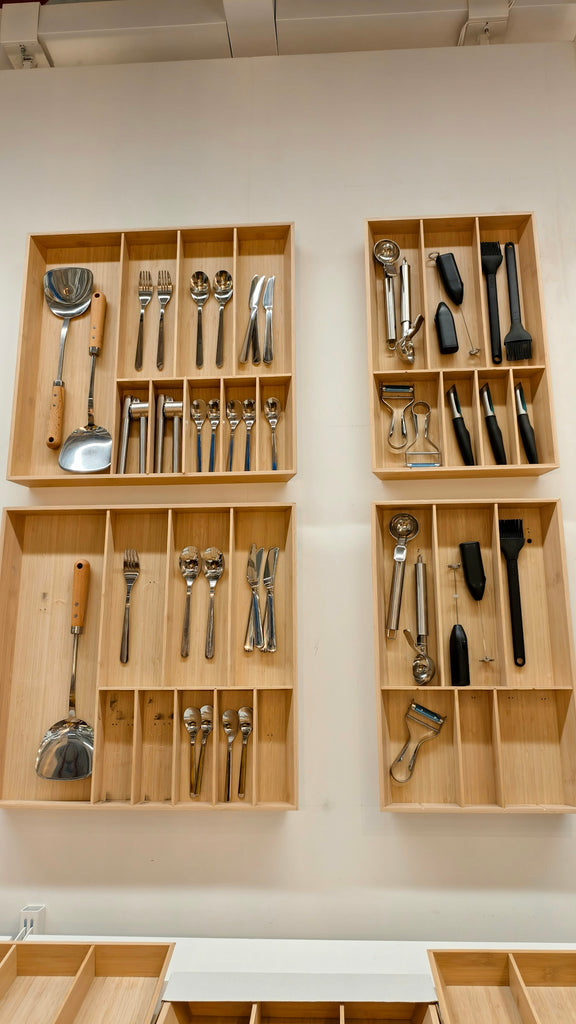
Once the drawer is cleared, divide it by task rather than by random object type. In this example, the front section is reserved for small, grab-and-go essentials: measuring spoons, a vegetable peeler, kitchen shears, and a can opener. The middle section holds longer tools such as a silicone spatula, tongs, whisk, and turner. The back section is for specialty prep items used a few times a week, including a garlic press, citrus tool, and handheld grater.
That arrangement works because it follows your natural movement. You open the drawer, reach for the small tools first, then pull out longer utensils only when the recipe calls for them. Nothing has to be stacked on top of something else.
Choose organizers that fit the drawer, not the trend
A drawer organizer only helps if its compartments fit the tools you own. Measure the inside width, depth, and height of the drawer before choosing inserts. Be sure to account for drawer slides and any lip around the upper edge, since those can limit usable space.
Adjustable bamboo-style dividers are a smart choice for a mixed utensil drawer because they let you create long sections for tongs and spatulas. Small modular trays work well for measuring spoons, bag clips, and other compact pieces. Non-slip liners underneath keep everything from shifting when the drawer opens quickly.
There is a trade-off here. Deep bins can hide a lot, which is helpful for bulky items, but they make small tools harder to see. Shallow compartments are usually better for everyday utensils because they create a clear visual inventory. If you can see it, you are more likely to use it and return it to the same place.
Build Zones Around How You Cook
The most useful drawer storage is based on routines, not perfection. Think about what happens during a typical weeknight meal. You wash produce, measure ingredients, open cans or jars, stir, flip, taste, and clean up. Your storage should keep the tools for those moments close to where they are needed.
A prep drawer is ideal for tools used before food reaches the pan. A second drawer near the stove can hold cooking utensils, while a narrow drawer closer to the sink can manage dishcloths, scrubbers, and sink accessories. Separating these jobs keeps one drawer from becoming overloaded and makes cleanup quicker for everyone in the household.
If you have only one convenient drawer, create zones within it. Keep sharp tools protected in a designated section, and avoid mixing them loosely with silicone or plastic utensils. Put measuring cups and spoons together, not scattered across several bins. Grouping by task removes the small decision of where to look each time you cook.
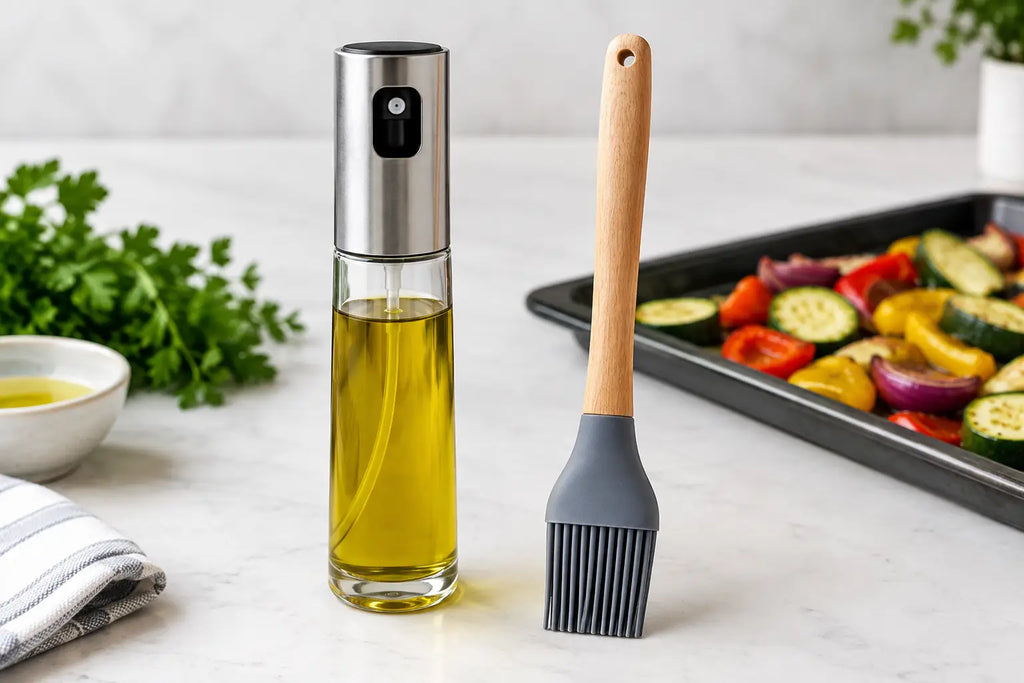
Consider the items that regularly create mess, too. An oil sprayer, spice grinder, or bottle opener may be useful near the stove, but storing one that drips or carries residue inside a utensil drawer can make everything feel grimy. Place those items on a tray in a cabinet, on a counter zone, or in a nearby pullout instead. The drawer should stay reserved for clean, dry tools whenever possible.
Give small tools a visible home
Small kitchen tools are often the first to disappear into clutter. Garlic presses, zesters, peelers, timers, and measuring spoons all need compact spaces where they cannot slide beneath larger utensils.
Use a low tray with several small sections, and keep like items together. For example, nesting measuring spoons can share a compartment with a leveler, while a peeler and garlic press can sit in the next one. The point is not to force every piece into an individual slot. It is to avoid the loose pile that turns a two-minute task into a hunt.
For families, it can help to label less obvious compartments for the first few weeks. Labels are especially useful when a newly organized drawer is shared by several cooks. Once the habit sticks, you can remove them or leave them in place for an extra-polished finish.
Make It Easier to Maintain Than to Mess Up
A beautiful makeover that requires constant resetting is not practical storage. The best system has enough flexibility for the real rhythm of a kitchen: a new utensil, a busy baking day, or a child putting tools away in a hurry.
Leave a little breathing room in each section. A compartment packed to the edges may look efficient, but it becomes frustrating the moment one additional item comes home. Think of empty space as a useful feature. It gives you room to return items easily and keeps the drawer from looking crowded after one meal.
Set a simple rule for new tools: one comes in only if it solves a specific problem or replaces something worn out. A multi-use tool often deserves space over a single-purpose gadget that rarely leaves the drawer. Quality matters here. A sturdy, comfortable tool you use several times a week is a better choice than several flimsy versions that create clutter.
Kitchen Canvas is built around this kind of practical upgrade: useful kitchen tools that make daily prep, cooking, and cleanup feel more manageable without asking you to redesign the whole room. A well-chosen garlic press, organized spice solution, or space-saving sink accessory can improve a routine when it is paired with a home that makes sense.
Plan for a quick reset once a month. It does not need to become a major organizing project. Remove crumbs, wipe the liner, return wandering items to their proper places, and let go of anything broken or no longer useful. Five minutes of maintenance is usually enough to protect the system.
When a Different Drawer Setup Makes More Sense
Not every household needs the same layout. If you cook elaborate meals often, you may want a dedicated baking drawer for measuring cups, pastry tools, and decorating supplies. If you live in a small apartment, a single deep drawer may need to handle prep tools and food storage accessories together. In that case, use stackable bins or a shallow upper tray so the most-used tools remain accessible.
A household that orders takeout more than it cooks may benefit from a true utility drawer with scissors, bag clips, napkins, and openers. There is no reason to copy a chef-style setup if it does not fit your routine. The right drawer storage makeover reflects how your kitchen actually works on a Tuesday night, not how it looks in a showroom.
Start with the drawer that annoys you most. Clear it, give the essentials a visible place, and notice how much calmer one small part of the kitchen can feel. That daily ease is what makes an organized drawer worth keeping.
Related post
15
Oct


