


Glass Versus Plastic Food Containers: Which Is Best?
A leftover pasta sauce can tell you a lot about glass versus plastic food containers. Store it in the wrong container, and you may be left with a lingering red stain, a stubborn odor, or one more dish that cannot go in the microwave. Choose the right one, and lunch prep, refrigerator organization, and weeknight cleanup all feel noticeably easier.
The better choice is not always glass or always plastic. It depends on what you cook, how you reheat it, how much cabinet space you have, and whether your containers need to survive a busy household. A smart kitchen often has both - with each material assigned to the jobs it handles best.
Glass Versus Plastic Food Containers at a Glance
Glass containers are ideal for foods that need reheating, foods with bold colors or aromas, and meals you want to serve straight from the container. They look polished in the refrigerator, do not absorb odors easily, and can move from fridge to microwave or oven when the manufacturer says they are oven-safe.
Plastic containers are the everyday workhorses for lighter lunches, snacks, dry ingredients, and meals on the move. They are easy to carry, less likely to break when dropped, and usually take up less weight in a lunch bag. They can also be more budget-friendly when you need a larger set for a family, meal-prep routine, or pantry reset.
The goal is not to fill your cabinets with one material. It is to make every container earn its shelf space.
When Glass Is Worth the Cabinet Space
Glass food containers feel like a small upgrade because they solve several common storage frustrations at once. Their nonporous surface helps resist stains and lingering smells, making them a great match for chili, curry, tomato sauce, marinated vegetables, garlic-heavy leftovers, and anything else that tends to leave its mark.
Better for reheating and serving
For many households, the biggest advantage of glass is convenience at mealtime. A quality glass container can often go from refrigerator to microwave, then directly to the table. Instead of transferring baked pasta or roasted vegetables to another dish, you can reheat and serve in the same container.
Always check the care instructions first. Not every glass base is designed for high oven heat, and lids should generally stay out of the oven and microwave unless specifically labeled safe. Avoid dramatic temperature changes, too. A cold glass dish should not go straight into a very hot oven, and a hot container should not be placed on a cold or wet surface.
Cleaner storage for colorful, aromatic foods
Glass is especially helpful when you regularly cook foods that stain plastic. Turmeric, red sauces, berries, beet salads, and oily dressings are much less likely to leave a visible reminder behind. Glass also does a better job of staying neutral after storing strong-smelling ingredients such as onions, fish, or garlic.
That makes it a practical choice for meal prep. Your containers stay clear, clean-looking, and ready for the next recipe rather than slowly becoming a collection of orange-tinted leftovers.
A polished look in the fridge
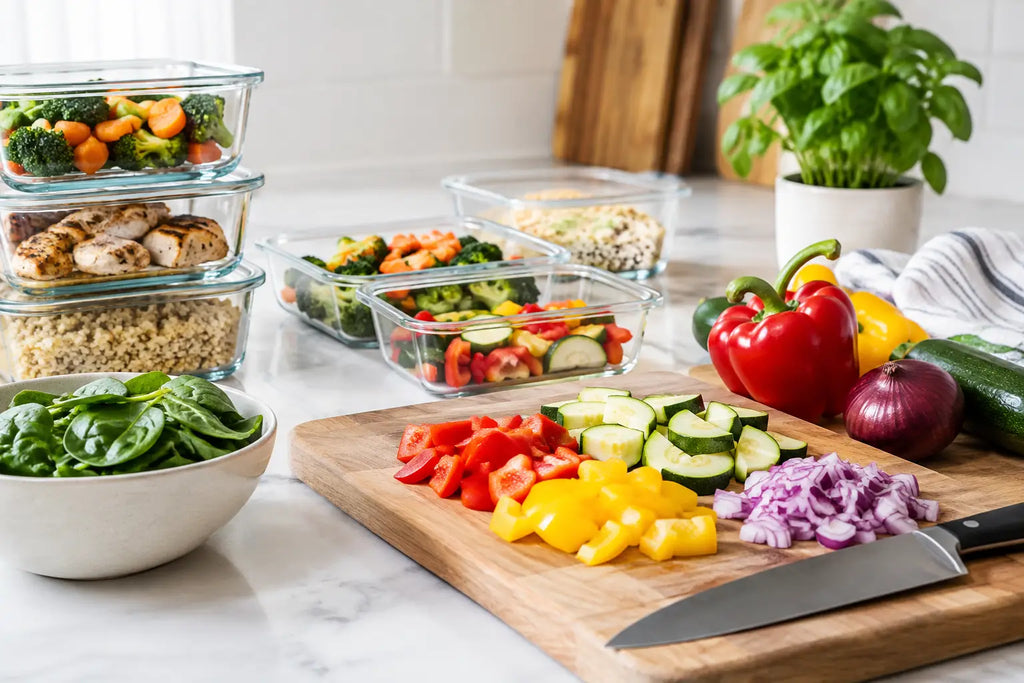
There is also a visual benefit. Glass containers make leftovers and prepped ingredients easy to see, which can help reduce forgotten food at the back of the fridge. Neat stacks of chopped vegetables, grains, sauces, and ready-to-reheat meals can make the whole kitchen feel more organized without a full renovation.
The trade-off is weight. Glass is heavier to lift, harder on crowded shelves, and more vulnerable to breaking if dropped. It may not be the first choice for a child’s lunch, an outdoor picnic, or a bag that gets tossed around during a commute.
Where Plastic Food Containers Make More Sense
Plastic has earned its place in practical kitchens for a reason. It is lightweight, easy to grab, and well suited to the fast, everyday jobs that do not require oven-safe storage or presentation-ready serving.
Easier for lunches, snacks, and travel
A plastic container is often the better pick when portability matters. It adds little weight to a backpack, gym bag, or lunch tote, and a drop on the floor is less likely to end your container’s life. For sliced fruit, crackers, salads, sandwiches, cereal, and cold leftovers, plastic is simple and dependable.
It is also useful for homes with younger children or anyone who prefers storage that feels less fragile. A durable plastic set lets you pack food without worrying about broken glass in a lunch bag or around the kitchen floor.
Budget-friendly for bigger routines
If you are setting up a new kitchen, organizing a pantry, or cooking for several people, plastic containers can make it easier to build a useful system without overspending. Having enough containers matters. A few beautiful glass dishes will not make meal prep easier if you run out of storage halfway through chopping vegetables.
Plastic is also a convenient choice for ingredient prep. Use it for washed berries, sliced peppers, sandwich toppings, and portioned snacks that will be eaten within a few days. Clear designs still help you see what is on hand, while stackable shapes make crowded refrigerators feel more manageable.
The limits to keep in mind
Not all plastic containers are designed for every task. Look for food-safe containers and follow the manufacturer’s labels for dishwasher and microwave use. If a plastic container is scratched, warped, cracked, or holding odors that will not wash out, it is time to replace it.
Plastic also needs a little more care with hot, oily, or deeply colored foods. Reheating a tomato-based soup or greasy leftovers may leave staining behind, especially over time. When in doubt, move a hot meal into glass before heating it.
The Real Decision: Match the Container to the Food
The easiest way to choose is to think about what happens after dinner. If leftovers will be reheated tomorrow, glass is usually the more convenient option. If you are packing cold snacks for a road trip, plastic is likely the easier carry.
Use glass for saucy dinners, cooked grains, casseroles, marinated proteins, and leftovers you want to heat and serve. Use plastic for lunchbox staples, dry pantry items, cut fruit, quick snack portions, and lightweight transport. For fresh produce, make sure food has cooled and dried before sealing it away, since excess moisture can shorten its life.
Lids matter just as much as the container base. A container is only useful if it keeps food securely contained and stacks without wobbling. Look for snug-fitting lids, shapes that nest when empty, and sizes that reflect the way you actually cook. A mix of small containers for sauces and snacks, medium containers for lunches, and larger containers for family leftovers covers most daily needs.
How to Build a Smarter Container Collection
Start by noticing your repeat problems. Maybe your refrigerator is full of mismatched lids. Maybe you keep reheating food in disposable takeout tubs. Maybe prepared ingredients get lost behind large pots and go unused. The right container collection should make those moments easier, not create another cabinet full of clutter.
For most homes, a balanced approach works best: keep glass containers for hot meals and long-lasting leftovers, then use durable plastic containers for light, portable storage. Choose mostly rectangular or square containers if maximizing shelf space is the priority. Round containers are useful for soups, sauces, and small portions, but they can leave more unused space in a tightly organized refrigerator.
It also helps to choose a limited range of lid styles and container sizes. Fewer matching systems mean less searching, faster cleanup, and a cabinet that stays organized longer. At Kitchen Canvas, the best kitchen upgrades are the ones that make daily routines feel simpler from the first use.
A container should do more than hold food. It should help you waste less, reheat with less effort, pack with more confidence, and open the refrigerator to a space that feels ready for the week ahead.
Related post
15
Oct


