


Choose a Kitchen Utensil Holder That Works Hard
A drawer full of spatulas is fine until dinner is halfway done, the sauce is bubbling, and the spoon you need is buried under three whisks. A well-chosen kitchen utensil holder puts your everyday tools within reach, gives the counter a more finished look, and makes cooking feel less like a search mission.
It is a small upgrade, but one that earns its place every single day. The key is choosing a holder that fits the way you cook, not simply the one that looks best in a product photo.
What a kitchen utensil holder should solve
A utensil holder has one basic job: keep frequently used tools easy to grab and easy to put away. But the right design can do more than that. It can free up a crowded drawer, reduce countertop clutter, and keep wet or recently washed tools from ending up in a messy pile beside the sink.
For most kitchens, the best holder creates a simple home for the tools used most often: turners, serving spoons, tongs, ladles, whisks, wooden spoons, and silicone spatulas. When those essentials are visible, meal prep moves more smoothly. You spend less time opening drawers with sticky fingers and more time paying attention to what is in the pan.
There is a balance, though. A holder that is too small becomes overstuffed and unstable. One that is oversized can take up more counter space than it saves. Think of it as a working tool, not just a decorative container.
Start with your real utensil collection
Before choosing a style, pull out the tools you use in a normal week. Not every specialty gadget needs countertop space. The citrus zester, pastry brush, turkey baster, and cookie scoop can stay in a drawer until needed. Your holder should support everyday cooking, not become storage for every utensil you own.
A good starting point is eight to 12 tools. If you cook often for a family or regularly make larger meals, you may need room for more. In that case, two smaller holders can work better than one extra-large crock. Keep stirring and cooking tools near the stove, then place prep tools, such as peelers and measuring spoons, in a drawer or separate organizer.
Also consider height. Long-handled tools need a holder deep enough to stay upright without disappearing inside it. At the same time, a very tall container can make shorter tools hard to reach. A mid-height holder with a stable, weighted base is often the most practical choice for a busy kitchen.
A quick capacity check
Place the utensils you plan to store together in a measuring pitcher or large cup. If they lean heavily, crowd one another, or make the container tip, you need more space. This simple test helps you avoid buying a holder that looks roomy but does not handle your actual collection.
Choose a material that matches your routine
Material affects more than appearance. It determines how the holder feels on the counter, how easy it is to clean, and whether it can handle daily use near heat, splatters, and water.
Ceramic holders offer a clean, elevated look and enough weight to keep utensils steady. They work especially well for cooks who want a polished countertop without spending on a full kitchen refresh. The trade-off is that ceramic can chip or break if dropped, so it may not be the best choice in a fast-moving household with young kids.
Stainless steel is sleek, durable, and easy to wipe down. It pairs naturally with modern appliances and can handle regular use, although fingerprints and water spots may show more readily on a shiny finish. A brushed or matte surface is often lower maintenance.
Bamboo and wood bring warmth to the kitchen and look great alongside cutting boards or neutral cookware. They need a little more care because standing water can cause damage over time. If you choose a wood holder, dry it promptly and avoid letting damp utensils sit inside for hours.
Plastic and silicone options can be lightweight, affordable, and easy to wash. They are a smart pick for utility-focused kitchens, especially when they include a removable drip tray or nonslip base. Look for a sturdy construction that does not flex or wobble when full.
Pick the shape for where it will live
Round crocks are classic for a reason. They hold a mix of tool shapes, are easy to clean, and fit naturally beside a cooktop. Square or rectangular holders can make better use of a narrow counter, particularly when placed against a backsplash.
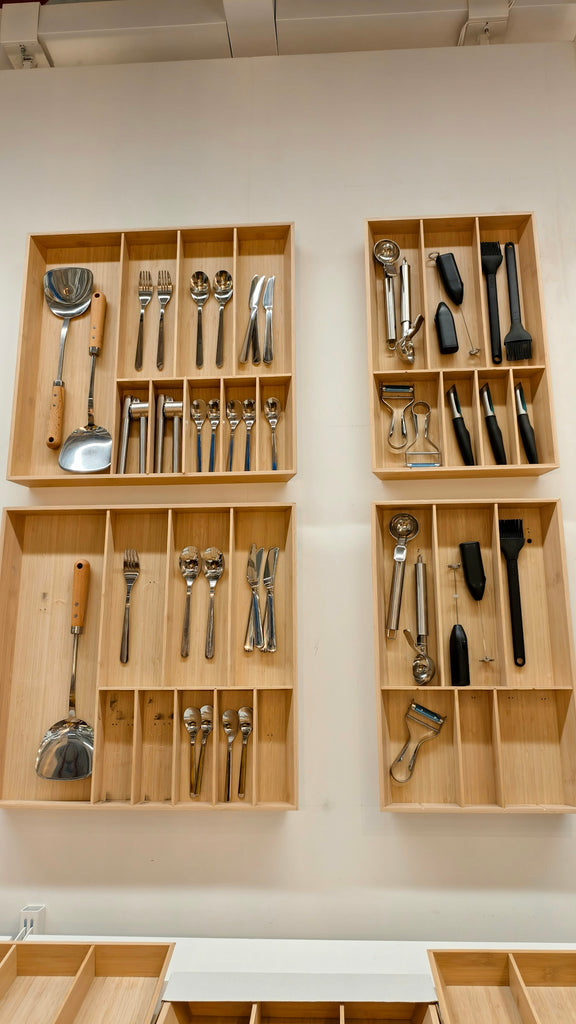
If your countertop is limited, look beyond the standard open crock. Wall-mounted rails, hanging utensil racks, and slim countertop caddies can keep tools accessible without claiming valuable prep space. These options are especially useful in apartments, galley kitchens, and kitchens where the counter next to the stove is also the main chopping area.
Just be realistic about placement. A holder directly beside a burner is convenient, but it should sit far enough away to avoid grease splatter and heat exposure. Keep flammable materials, such as wood, at a comfortable distance from open flames. On an electric or induction cooktop, leave enough room that handles do not rest over a hot surface.
Make organization work harder
The most useful kitchen utensil holder is organized with purpose. Put the tools you reach for with one hand near the front: a spatula, wooden spoon, tongs, and ladle. Keep sharp items out of the holder whenever possible. Knives, shears, and pointed tools are safer in dedicated storage, where you are not reaching blindly around them.
If your holder has compartments, use them to separate cooking tools from serving utensils. This prevents long handles from tangling and makes it easier to spot what you need. A divided design is particularly helpful if you use both silicone and wooden utensils, since the materials can be grouped according to task or cleanup needs.
Color can help, too, but it should serve the kitchen rather than create visual noise. A neutral holder creates a calm base for colorful tools, while a bold holder can add personality to an otherwise simple counter. Either way, leave some breathing room inside. When tools are packed tightly together, they are harder to grab and more likely to bring the whole container with them.
Keep it clean without making it another chore
Utensil holders collect crumbs, oil mist, and drips faster than most people expect. A quick weekly wipe keeps the outside looking fresh, while a more thorough wash every few weeks prevents buildup at the bottom.
For ceramic, stainless steel, plastic, and silicone, empty the holder and wash it with warm, soapy water according to the manufacturer’s care instructions. Dry it fully before returning utensils. For wood or bamboo, use a lightly damp cloth and mild soap, then dry immediately. Avoid soaking wooden pieces or putting them in the dishwasher unless they are specifically labeled dishwasher-safe.
It also helps to put away tools only after they have been rinsed and dried. A little moisture is normal, but repeatedly dropping wet utensils into a closed-bottom holder can create odors or leave residue behind. If you often wash tools while cooking, a holder with ventilation or a removable base can make cleanup easier.
Small details that make a big difference
The best choice is often found in the details: a wide base that resists tipping, a smooth interior that is easy to wipe, protective feet that will not scratch the counter, and enough weight to hold tongs without leaning. These features may sound minor, but they are what make a holder feel useful after the first week, not just attractive on day one.
At Kitchen Canvas, the goal is simple: practical kitchen upgrades should make daily routines feel easier without asking you to redesign the whole room. A utensil holder is one of those easy wins. Pair it with the tools you truly use, give it a thoughtful spot near your workspace, and let your counter support the way you cook rather than compete with it.
A calmer kitchen rarely comes from adding more. Often, it comes from giving the right everyday items a place where they are ready when you are.
Related post
15
Oct


